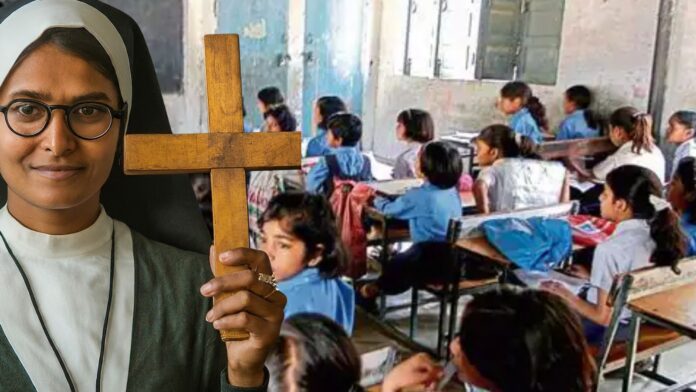
In the year 1984, immediately after the assassination of Smt. Indira Gandhi, a seminar on communalism was organized by the Central Government in Chennai. Speaking at the seminar, Sri C. Subramaniam, the former Defence Minister, said that he could not understand as to how even many Congressmen were worried and concerned about the conversions of a handful of Harijans to Islam at Meenakshipuram. “What would it matter?” he asked.
I thrust myself as one of the speakers in the seminar and reminded him of what Jinnah had told Jawaharlal Nehru prior to the partition. When Nehru had ridiculed the demand for Pakistan as a fantasy, Jinnah retorted that Pakistan became an established fact even when the first Hindu of this land was converted to Islam, nearly twelve hundred years ago when Turks invaded our country. What he was now seeking through the demand for partition was nothing but a political recognition of this reality. If, according to Jinnah, one Hindu becoming a Muslim was sufficient for the demand of a separate land, what of the five hundred Harijans embracing Islam enbloc in the tiny village of Meenakshipuram? Why do responsible citizens like Mr. C. Subramaniam fail to realise the potent dangers of such mass conversions either to Islam or to Christianity, was the question I posed at that seminar.
In fact, the Meenakshipuram conversion episode was a providential design to awaken the Hindus to the dangers of such happenings. Prior to Meenakshipuram and even after Meenakshipuram, such proselytisation efforts are always going on in different parts of the country. But the Hindu society does not bother about such happenings. Mahakavi Bharathiar had commented once in his journal in 1906:
The Christian Padri has converted nearly 300 Harijans at Eluru in Andhra. Such conversions occur very often at different plakhes of our country. This should cause great concern as the Hindu population is slowly depleting. I have read about a python sleeping unconcerned when its tail was on fire. Such a suicidal act on the part of Hindus would only result in total destruction of them. Oh Hindus! Awaken! Those who are unconcerned about the depletion of Hindu population are only blind to reality.
Even Swami Vivekananda warned in those days that every man going out of the Hindu pale is not only a man less, but also an enemy the more. But the society never paid any serious attention to this sane advice.
Origin of Mass Conversions in India
Religious proselytisation, which is alien to our culture started with the Islamic invasions over Bharat. The invaders were not only interested in looting the wealth of our nation but they were zealous about converting our people to Islam by force. Thousands were either killed or converted by coercion during Islamic rule. Once the tidal wave of the foreign aggression receded, some efforts were made both in North West and Sind, the early targets of Islamic proselytisation, to bring the perverts back to Hindu fold. Devala Smriti emphasised the need for such reconversions and also enumerated the process of reconversion. But unfortunately this practice of bringing back our people to Hindu fold died out in due course.
Conversion has been for the last one thousand years, a great problem, of which, we had utterly failed to realise the disastrous implications. In our innocence, we fondly believed that the faiths of the aggressors too were similar to ours; that they were merely different modes of spiritual approach; that conversions to their faiths was just a personal affair. We never looked around to find out the fate of nations which had fallen a prey to the invasion of these faiths; how Nation after Nation with their culture, history, tradition and values were sucked into the new aggressors’ ways of life; and how, in short, the change to those faiths was not a simple case of religious conversion, but total alienation from the national society.
Historical Blunders
It is very surprising that even the Vijayanagar Empire, established with the sole aim of protecting Hindu culture in the down south and resisting the Islamic invasions, did not take any solid step to reconvert the Muslim converts back to Hindu fold during their reign. Those kings who brought an end to the Muslim rule even in Madurai and renovated all the temples desecrated by Malikafur didn’t do anything worth the name to order all the non-Hindus to revert back to Hindu fold. The result of this neglect is obvious today. Also, they remained silent spectators of Portuguese proselytisation activities carried on zealously in the western coastal areas. This has alienated a sizable fishermen population in Kerala from the Hindu fold to Christianity.
The main cause for the defeat of Rama Raya in the battle against the Sultanate power and the downfall of the great Vijayanagar empire was the recruitment of large number of Muslims in the army, without having an insight into their political behaviour pattern. Unable to understand that Islam was not just an alternate way of worship but an imperialist ideology, dressed up in religious verbiage, they gave employment to these Muslim mercenaries in all positions high and low.
Even the “Hindavi Swaraj” established by Chatrapati Shivaji did not envisage the potent dangers of allowing the Muslim converts to remain as they were. Even during the Maratha empire the Englishmen who came for trading were allowed to freely practise their religion and also propagate it. The Portuguese proselytisation activities alienated a sizable fishermen population in the West coast and the inquisition in Goa was unquestioned and unchecked by any Hindu ruler.
An interesting episode in Kashmir could illustrate the thoughtless and suicidal approach of Hindu society to matters like reconversion of Muslims to Hindu fold. A delegation of Muslims approached the then ruler of Kashmir Sri Ranbir Singh (probably in the 1840s) with a request to arrange for their coming back to Hindu fold as their forefathers had been converted to Islam only by force. The Maharajah was pleased with the idea and assured the delegation that he would do the needful. The king consulted the pandits of Kashmir on the issue. They advised him to seek opinions of pandits of Kashi as they were more knowledgeable than them; the Maharajah sought their advice. They said that there was no provision for reconversion in Hindu Dharma Shastras and any attempt on the part of the king to set a new precedent would make the king tainted with brahmahatya dosha and all the Brahmins of Kashi threatened to drown themselves in Ganga if the king was bent upon reconverting the Muslims against their wishes. The king was disappointed and did not care to violate their ordinance. The result is that now Kashmir has become a chronic headache for us and the entire country is suffering from the sin of not taking the Muslims of Kashmir back to Hindu fold.
No wonder, with this simplicity on our part, conversion to non-Hindu faiths went on merrily as a one-way traffic without let or hindrance, with what catastrophic results we all know. This is because our dharmic lawgivers had failed to take a fresh look at the prevalent interpretation of Dharma and proclaim a new smriti so that society could meet the looming threat.
Swami Dayananda and the Shuddhi Movement
It was Swami Dayananda who first made a bold attempt at reconverting the Muslims and Christians back to the Hindu fold by making the Shuddhi ceremony a part of the Arya Samaj activity. Thus, he cried a halt to the one-way exodus from the Hindu to the non-Hindu faiths and opened its doors to all those who were willing to come back to their ancestral religion. The Swami felt that unless immediate steps were taken to stem the Hindu exodus, the fate of Hindus and of the country would be sealed. The Swami launched a mass Shuddhi campaign for bringing the converted back to the Hindu fold.
In the 1920s, the Moplahs started attacking the innocent Hindus in Kerala. They murdered 1500 Hindus, abducted thousands of women, forcibly converted 20,000 persons to Islam (refer the Servants of India Committee Report). Swami Shraddhananda, a prominent leader of the Arya Samaj, started reconverting Muslims by the thousands. This was in response to the mass conversions of Hindus to Islam during the Moplah riots in Kerala province and elsewhere in the country.
Muslims launched a countrywide crusade for converting helpless Hindus to Islam. A booklet was published by Hasan Nizami in 1923 asking the Muslims to convert Hindus to Islam by all means fair and foul; to concentrate among the Harijans so that, if all untouchable communities become Muslims then the Muslim population will outnumber Hindus, or become at least equal to that of Hindus.
Swami Shraddhananda uncovered this great conspiracy and published a pamphlet, The Hour of Danger in which he had warned Hindu society to be on its guard against such mischievous machinations. The Swami exposed the evil designs of Muslims for the spread of Islam and how a secret extensive spy network was being built by the conspirators to convert our Motherland into Dar-ul-Islam.
Because of these strenuous efforts of Swami Shraddhananda, thousands of converts began to respond to his appeal to re-embrace Hindu Dharma. It is said that in the first half of 1923 alone, more than 18,000 Muslims returned to the Hindu fold in some parts of Uttar Pradesh. Not surprisingly, the Congress leaders of those days denounced Swami Shraddhananda for his Shuddhi movement. Members of the Arya Samaj who were engaged in Shuddhi work were kept out of the Congress Executive.
Emboldened by this attitude of the Congress leaders and annoyed by the work of reconversion of Muslims to Hindu fold by Swami Shraddhananda, and egged by Mullahs, a Muslim fanatic called Abdul Rashid assassinated the Swamiji on 23rd December 1926. Thus, the Shuddhi Movement suffered a setback. The Mullahs of Deoband offered special prayers for the soul of the assassin!
Other Pioneers
Another note worthy person in the field of reconverting the apostates is Shri Gajanan Bhaskar Vaidya who started the “Hindu Missionary Society” with the declared intention of admitting any non-Hindu to Hindu society who wished to adopt Hindu Dharma.
Shri Masurkar Maharaj, a vigorous sannyasi, brought about a mass shuddhi of the Gavadas in Goa. The Gavadas are village peasants and they were nominally Christians under the pressure and fear of Portuguese rule. It was a feat of great daring and heroism on the part of Shri Masurkar Maharaj and his workers to bring about this mass reconversion at the time when Goa was still under Portuguese rule. Brahmachari Dattamurthiji of Masurashram was another noteworthy person who was engaging himself in Shuddhi movement.
Reconvert the Perverts
In fact, after Swami Shraddhananda, it is only the Vishva Hindu Parishad (VHP) which has taken up Paravartan as a major activity. In 1967, nearly one thousand Christian fishermen re-embraced Hindu Dharma in Idinthakarai, a tiny village of coastal Tamilnadu. Shri Guruji Golwalkar highly appreciated the move of the VHP workers in this direction and said that Idinthakarai would generate similar healthy trends elsewhere also. This was followed by several Paravartan programmes all over the country.
In Rajasthan nearly 54,000 Muslim Meherats, the descendants of Prithiviraj Chauhan, have been brought back to the Hindu fold in 148 shuddhi programmes in the Merwara-Magra region. Large-scale reconversions have taken plakhe in Orissa, Bihar, Karnataka, Andhra and Tamilnadu; two lakh persons have been brought back to the Hindu fold so far.
A Demographic siege
As no concerted effort has been made in the past to stop further conversions and also reconvert the earlier converts, many areas of our country are slowly becoming Hindu minority areas. It is a historical fact that the areas in which Hindu population declined and the non-Hindu population rose above 50% have ceased to be parts of our punyabhoomi Bharat. To cite a few examples, today’s Afghanistan (once Gandhar), Pakistan, Baluchisthan, Punjab, Sind and Sonar Bangla. We know very well about what is happening in Kashmir and Assam.
The random survey conducted by the Central Health and Welfare Ministry in the year 1988 shows that while 9% of the Muslim families only took to family planning whereas 14% of the Hindu families were restricting their population by taking to family planning immediately after the birth of the second child. On an average every Muslim has married more than one wife and had begotten not less than six children.
During the last few decades a substantial proportion of the population in the north-eastern border States has become Christian. The conversion to Christianity during the British regime was much less in spite of the State patronage when compared to the growth of Christianity in Independent Bharat where a secular State exists.
Christians now constitute more than 85% of the population in Nagaland and Mizoram, about 65% in Meghalaya and about 35% in the traditionally assertive Hindu province of Manipur. It is worth remembering that there were just 14 Christians in all in Manipur, in 1910. The percentage of Christians in Orissa has gone up from 0.9% in 1951 to 2.10 in 1991. The increase is sharp in the districts of Ganjam, Koraput, Phulvani and Sundergarh. Many Christian organisations are actively engaged in proselytisation activity in these districts. If you look at the growth of Christians in the north-eastern region of our country you would be appalled at the multiplication of Christians by proselytisation. The entire political scenario of the northeast is controlled today by the Church and its agents. Every census enumeration after Independence has shown a clear decline in Hindu population and a steady increase in Christian and Muslim figures.
In Kerala 19.32% of the population has been converted to Christianity. They have made great strides in Tamilnadu, Goa, Bihar, Orissa, West Bengal and Andhra Pradesh. It is astonishing and agonising to note that in the last fifty years of independent rule, 40 districts have become Muslim dominated districts. Almost in many of these districts the Muslim population is above 20%. Surprisingly, the Government of Bharat declared these 40 districts as ‘minority dominated districts’ to which objections were raised in Lok Sabha. Hence, they were renamed as ‘districts having larger concentration of minorities’.
In a reply to the question of Shri. G.M. Banatwala in the Lok Sabha on 18th March 1988, Shri Edwardo Faleiro informed that one bank in each of these districts was made responsible for the minorities. In order to monitor the loan applications of minority of the persons of minority groups. Polytechnics were started in all these 40 districts, exclusively for Muslim students. Engineering colleges were also started in some of these districts. Minority Finance Commissions were set up to advance loans, only to Muslims, for setting up business or trade. Special Coaching Centres were set up in these districts for training Muslim youth for I. A. S. and I. P. S. services.
Even during British regime, Assam was flooded with Muslims from East Bengal. The then Chief Minister of Assam, Sadullah, encouraged Muslims to come over and settle in Assam to accelerate the growth of Muslims as aptly observed by Wavel in his diary. These infiltrators have managed to register themselves as citizens of our country and they have become voters also. In 1967, Shri Fakruddin Ali Ahmed could win the Lok Sabha elections only with the one lakh votes of infiltrators. Not one Muslim foreigner has been detected, disfranchised, and deported to Bangladesh till this date. Bangladesh has opened sluice gates to deluge the province of Assam with Muslims. It is a matter of grave concern because when the Muslims were only 24.28% of the total population in 1941, we had to lose a territory of Bharat in the name of Pakistan.
Similarly Christians are dominating the following provinces: Kerala (Southern districts), Jharkhand, Tribal districts of Madhya Pradesh, Tribal districts in Orissa, Nagaland, Mizoram, Hill areas of Manipur and Tripura, Meghalaya and Arunachal Pradesh. There is also a phenomenal growth of Muslims in the sensitive northeast region. The increase of Muslim population in the northeast, particularly in Assam, is due to this unchecked largescale infiltration of Muslims from Bangladesh. These Bangladeshi Muslims have slowly and steadily crept into Delhi, Bombay, Lucknow and other major industrial cities causing communal tensions in these areas. Since 1981 the infiltration has been increasing without any check. In Delhi, the proportion of Muslims in the population has arisen from less than 6% in 1951 to nearly 10% in 1991.
Conversion fuels Separatism
It is not only the numerical strength of infiltrators, which is going up steadily in many parts of our country but also their economic clout. The infiltrators who came to Bharat were extremely poor but have become rich, and that too, through their criminal and smuggling activities. Some of the richest Muslims in the country are to be found in Tamilnadu, Bombay, Jamshedpur and Delhi. Shri S. Naspar Mohammed Jaffer in his letter in The Hindu dated 03.11.83 stated that Bharat would become a Muslim majority country by the year 2281. But Tamilnadu might become a Muslim majority province even much earlier i.e. by the year 2231.
Referring to this statement one Shri. M. V. Padmanabhan of Kolar wrote in The HIndu dated 14.11.83 that Muslim population growth follows a geometrical progression while the Hindu growth is only arithmetical. Hence, he argued that Bharat would become a Muslim majority country even by the year 2051. According to Home Ministry sources, in 25 Parliament Constituencies in Uttar Pradesh, and 146 of the 294 Assembly segments in Bengal, the demographic picture has changed to such an extent that Muslims are in a commanding position to influence the electoral victories of the political parties. Similar is the picture in several other States also.
Sometime in the mid eighties, Muslims of Murshidabad district in West Bengal raised slogans that since they were in a majority they wanted to secede from Bharat and join the Islamic Republic of Bangladesh. This is an early warning of the coming storm. On the basis of the above facts, are we not drifting towards another partition? Is it not the duty of every Hindu to see that this drift towards another catastrophe is halted at some point?
Conversion by Deception
How did the converts leave their ancestral home? Was it out of their own sweet will and out of conviction of the superiority of those alien faiths? Well, history does not record a single notable instance of that sort. On the contrary, the reason was the fear of death or coercion or the various temptations of power, position etc. There was a lot of deception also. For instance, consider this well-known trick used by the missionaries: a piece of beef or a loaf used to be thrown into the water tank or well of a village and the villagers ignorant of what had happened used to take the water as usual. On the next morning the missionary would come and declare that they had used the polluted water and the Village Panchayat would take a suicidal decision ostracizing the people who had drunk the polluted water. Such outcastes had no other go but to embrace Christianity. Innumerable episodes and methods, such as these, can be cited; this is proselytisation by deception, pure and simple.
Islam and Christianity are not religions as we understand by the term, and their conversion was not of religious nature. They converted people with an intention of swelling their numbers for political domination. Islam and Christianity are imperialistic ideologies grabbing more and more land for their political domination in the garb of religion.
It will be interesting to mention that till as late as 1930s Muslims in large parts of Bharat including NWFP in Pakistan were governed by the Hindu law of succession because of their Hindu ancestry. Even after introduction of Muslim Shariat Law in the year 1937, the Muslims were given the option to be governed either by Hindu Laws or the Shariat Law. Even today, there are Muslim Rajputs, both in Bharat and Pakistan who are more proud of their Rajput lineage than of being Muslims. The Hindus therefore must invite the Muslims in the entire Akhand Bharat, to revert en masse to their original religion. Such reversion is possible and desirable because the Muslims are largely the descendants of Hindu apostates only. Reversion to Hindu Dharma will be nothing but home-coming, a simple return to their ancestral faith.
Assimilative Capacity of Sanatana Dharma
Assimilation of outsiders has been one of the strong points of Hindu Dharma, and there is no reason why we cannot absorb and assimilate millions of Hindu apostates and their progeny. If Muslims can seek converts why can’t Hindus seek ‘reverts’? There is nothing unethical about re-assimilating the entire mass of Hindu apostates.
There are many doubting Thomases in our society questioning the propriety of reconverting our Christian and Muslim brothers back to Hindu fold. For them Swami Vivekananda’s reply would be the fitting answer. A press correspondent wanted to know the opinion of Swamiji on the matter of receiving back into Hindu Dharma those who had been converted from it. Swamiji replied that all those perverts ought to be taken back, saying that we would otherwise decrease in numbers:
…when the Mohammedans first came we are told – I think on the authority of Ferishta, the oldest Mohammedan historian – to have been six hundred millions of Hindus. Now we are about two hundred millions.
Again, the vast majority of Hindu perverts to Islam and Christianity is perverts by the Sword.
Ceremonies of expiation are no doubt suitable in the case of willing reconverts returning to their Mother-religion, as it were. In large-scale reconversions even those ceremonies need not be imposed.
Swamiji also wanted that all those returning converts should be allowed to choose their own way of worship. He commented vehemently,
Come and see what the padris are doing in Dakshin. They are converting by lakhs the lower classes of Travancore – nearly one fourth of the population has become Christians.
Today almost 20% are Christians in Kerala. These Christians are mostly concentrated in southern Kerala. Northern Kerala is dominated by the Muslims who form 23.33% of the state population.
Anti-Conversion Legislation: Early attempts
Shri. R. R. Diwakar, a Member of the Constituent Assembly wanted an amendment to the clause regarding freedom of religion, saying that freedom of religion should not include ‘Proselytisation’.
He argued that proselytisation would give undue advantage to other religions and put Hindus at a disadvantageous position. But the representatives of the proselytising religions went in strong delegation to Sardar Patel and made him not to accept the amendment. Diwakar was of the opinion that in a democracy of the type that we are suffering from, adding numbers to vote banks is a clear advantage given to proselytising religions and to that extent a disadvantage to the Hindu Dharma which does not indulge in conversion.
Article 25 (1) of the Constitution of Bharat reads as follows:
Subject to public order, morality and health and to other provisions of this part, all persons are equally entitled to freedom of conscience and the right to freely profess, practise and propagate religion.
Misusing this provision in our Constitution, the Christians and Muslims have been freely engaging themselves in converting the illiterate masses. The Governments of Madhya Pradesh, Orissa and Arunachal had to enact legislations banning the conversions by the following respective bills:
- Madhya Pradesh Dharma Swatantrya Adhiniyani 27 of 1968
- Orissa Freedom of Religion Act 2 of 1968
- Arunachal Pradesh Freedom of Religion Act 1978.
Christians went to the Supreme Court challenging these Acts. The Supreme Court observed:
What Article 25(l) grants is not the right to convert another person to one’s own religion, but to transmit or spread one’s religion by an exposition of its tenets.
It has to be remembered that Article 25 (1) guarantees “freedom of conscience” to every citizen and not merely to the followers of one particular religion, and that, in turn, postulates that there is no fundamental right to convert another person to one’s own religion. If a person purposely undertakes the conversion of another person to his religion, as distinguished from his effort to transmit or spread the tenets of his religion, that would infringe on the “freedom of conscience” guaranteed to all citizens of the country alike. What is freedom for one, is freedom for the other, in equal measure, and there can therefore be no such thing as a fundamental right to convert any person to one’s own religion.
In spite of this judgement, conversions go on scot-free in this country. The disastrous effects of our Government’s policy with its pseudo-secular approach are once again revealed eloquently, by the census figures.
Divide and Convert
Between 1935 and 1947 the number of converts to Christianity in Nagaland rose to only about 30,000, but between 1947 and 1951 it rose to 98,068 thanks to the religious freedom given by our Constitution to foreign missionaries. It is worth noting that total number of Nagas converted in 1891, almost after a half century of missionary activity, was only 211 and in 1901 it was 579. This shows the strong cultural bonds even among vanavasis and the dismal failure of missionary proselytisation activity in the beginning.
Taking undue advantage of the concessions and the privileges thrown to the religious minorities by our secular Governments, many evangelical missions of international order are working zealously in enticing the vanavasis and dalits to embrace Christianity. Several Liberation Theological Movements have sprung up in the past 50 years.
Similarly Islamic Tableque Movements are working in full swing with an eye to Islamise the 15 crore Harijans. The converts have been alienated from their national ethos and cultural moorings. This has caused much damage to our national unity, as is seen in several districts and provinces of our country.
The Christian Missionaries have divided this country into 107 parts and in every part, one foreign country is providing assistance for the purposes of proselytisation. Nearly 27 thousand square miles of area of this country is under the direct influence of foreign missionaries. The number of foreign Christians entering Bharat for evangelical work has increased multi-fold since Independence. Roughly, it is estimated that nearly 10,000 foreign Christian Missionaries are roaming about in our country, proselytising the illiterate and poor masses to Christianity. The motivation for Christian evangelism is simple: Disrupt and Destroy. The missions make no secret of it. It is a mistake to think that Christian Missionary enterprise is a religious movement. It was a declaration of war and an attack on the religious and cultural set up of the people of our nation. It was always politically motivated.
Christian Intolerance
In all Christian dominated areas the Christians are generally intolerant of Hindu Dharma, customs and traditions. Rather they have purged Christian converts of all the influences of our tradition and culture. Among the Naga Christians even their traditional Naga dance and music has been replaced by Western dance and pop music. The Christian Missionaries are driving out the Hindus from the Christian areas. Whenever it is possible, such as in Mizoram, they are working for the establishment of a Christian State with the active assistance of pseudo-secular political parties. The glaring example is the election manifesto of the Pradesh Congress of Mizoram in the year 1989:
As Christians, it is our bounden responsibility to proclaim the Gospel, to explore ways and means of sending pilgrims to the Holy Land, to revise school syllabus on the basis of Christian principles.
The Christian Missionary Activities Enquiry Committee appointed by the Madhya Pradesh Government in 1954 was headed by Shri M. B. Niyogi, retired Chief Justice of the Nagpur High Court. This Committee visited 77 centres, contacted 11,360 persons from 700 villages, examined 375 written statements and interviewed various leading missionaries. After two years of arduous labour, the Committee was of the opinion that Christian Missionaries were encouraging anti-national activities among the converts and strongly recommended for legislation banning the proselytisation activities. The Committee also recommended many measures that would restrict the activities of Christian Padris. Though the Madhya Pradesh Government enacted a similar legislation, in the year 1968, it could not be effective as the Padris worked in connivance with the politicians at the State and the Centre.
The Powerful Christian Lobby
In Rajasthan, an attempt was made in the year 1970 by the then Chief Minister Shri Hardev Joshi to bring a legislation banning conversion by fraudulent means but could not be passed in the legislature as the Christian lobby was very strong. In Bihar, a private bill was introduced by Shri Gowri Shankar Dalmia in the year 1966 and this was not accepted by the Assembly as many MLAs yielded again to Christian lobbying. In Gujarat, in the year 1962 the then Chief Minister Shri Kanthilal Phoolchand Ghia introduced a bill to contain Christian conversions by fraudulent means but the Assembly was dissolved before the Bill could be passed.
Even in the Parliament, several attempts were made to pass legislations banning conversions. First, the Private Member Bill was introduced in the year 1954 by Shri Jetalal Harikrishna. Again, in 1960, Shri Prakash Veer Shastri a member of the Arya Samaj and Member of Parliament introduced a bill to ban conversions. This was supported by Shri Atal Behari Vajpayee, Dr. Ram Subhagh, Shri Mahavir Tyagi, Shri Seth Govind Das, Shri Maniben Patel and Shri Ranvir Singh. But many others became a prey to Christian lobbying and opposed the bill. Hence the bill could not be passed. In 1978, during Janatha Government Sri Om Prakash Tyagi, a Member of Parliament of the then ruling party introduced a Private Member bill on 21st November 1978. This was also defeated by the treacherous attempts of Christians.
It is worth mentioning here, that in the same year, Israeli Knesset (Parliament) passed a Law making it an offence punishable by five years in jail, and heavy fines, for anyone to offer material benefits to induce another person to change his or her religion. This measure was designed to curb Christian missionaries who had offered huge some of money and other economic benefits to enslave the souls of the poor. In spite of Christian opposition, the Law was passed.
Similarly Justice Venugopal Commission instituted to enquire into the riots of Mandaikkadu in Kanyakumari district in March 1982 observed that the proselytising efforts of the Christian Padris were chiefly responsible for the riots in the district and the Commission suggested that all proselytisations should be stopped forthwith by an immediate legislation. But nothing has been done in that direction by the Government till date.
The mass conversions of Harijans that took place in Kurayoor, Kooriyoor, Athiyoothu, Melamadai and Meenakshipuram in Tamilnadu were the results of such concerted efforts on the part of Islamic Organisations like South Indian Isha-at-ul-Islam, Minavar-ul-Islam and Jamat-e-Islam etc.
A Gentle Awakening
The Meenakshipuram episode sent shock waves among the Hindus and reached even persons at the political helm of affairs. Huge Hindu congregations became a reality in several places giving a call for mass awakening among the Hindus and issuing a warning to the proselytising religious groups.
The Parishad took upon the onerous task of retaining this awakening and launched upon a Mission, “Samskriti Raksha Yojana”. Though apparently there is no mass conversion activities at the surface level since then, we need not come to the conclusion that the proselytisation process has come to a halt. Hence, Dharma Prasar, a three pronged movement of the VHP is being implemented in every province, to stop this aggressive evangelism. What are the three dimensions of this work?
- Put an end to further conversions of Hindus either to Christianity or Islam – employ all possible means for the same. A Central Legislation banning religious conversions is a must in this direction.
- Reconvert all those who had been deceitfully proselytised in the past. Explore all possible avenues for the same.
- Stabilise those who come back to our fold and strengthen their Hindu faith – see that all reconverts are accepted in our society with respect and they are given the social equality.
In fact, today every politician in Kerala looks forward to fulfilling the dictates of the Church for his own survival in the political field. The Christians in the south and the Muslims in the north of Kerala determine the fate of the State. This pathetic situation has to be changed and Hindus should become the destiny makers in Kerala.
Today, nearly one lakh padris and 1.25 lakh Islamic Tableque karyakarthas are energetically working in Christianising and Islamising our nation. Christian and Muslim organisations are receiving nearly 1400 crores every year from foreign countries for the proselytising activities. There are more than 2500 Christian groups and cults receiving foreign money for proselytisation activities.
The Hindu Society is yet to fully awaken to the dangers posed by the pan-Christian and pan-Islamic forces to the very freedom and integrity of this nation. We shall have to organise mass programmes educating the public. People are to be educated about the historical blunders of our society and the need to take remedial measures at this critical period of our history.
Long ago, Swami Vivekananda gave a clarion call to our youth to stand in defence of Hindu Dharma:
Everyday the Christian missionaries are abusing Hindu dharma to your face and your brothers are being converted to Christianity. How can you bear to see all this? Where is your valour?
A hundred thousand men and women fortified with eternal faith in the Lord and nerved to lion’s courage by their sympathy for the poor and the fallen and the downtrodden will go over the length and breadth of the land preaching the gospel of salvation, the gospel of help, the gospel of social raising up, the gospel of equality.
Today, the VHP is repeating the same call to the present day vanaprasthis and youths. When the onslaught of alien religions is threatening the very existence of our Hindu nation, if there is an iota of the blood of the glorious Rishi Parampara still left in our veins, we should respond to this call and take a pledge to protect this Hindu nation at any cost. I hope that I have been able to convey the historical sequence of this vital issue and the need to pay immediate attention to solve this problem once and for all.
[Shri R. B. V. S. Manian is a senior functionary of the Vishwa Hindu Parishad, Tamil Nadu. This article is based on a talk to the VHP karyakartas.]